
In Nigeria’s food business environment, rising fuel prices, unstable electricity, and high temperatures already put pressure on profitability. Yet, one major source of financial loss is often ignored: poor cold storage.
Many businesses focus only on the initial cost of buying a cold room without considering the long-term cost of running an inefficient system. From product spoilage to excessive diesel consumption, poor cold storage quietly reduces profits, operational efficiency, and customer trust.
Why Cold Storage System Matters in Nigeria
With frequent power outages, generator dependence, and extreme weather conditions, cold storage is no longer optional for supermarkets, restaurants, frozen food vendors, and distributors. It is critical business infrastructure.
An inefficient system can lead to:
- • Product spoilage
- • Higher operating costs
- • Reduced shelf life
- • Customer complaints
- • Loss of repeat customers
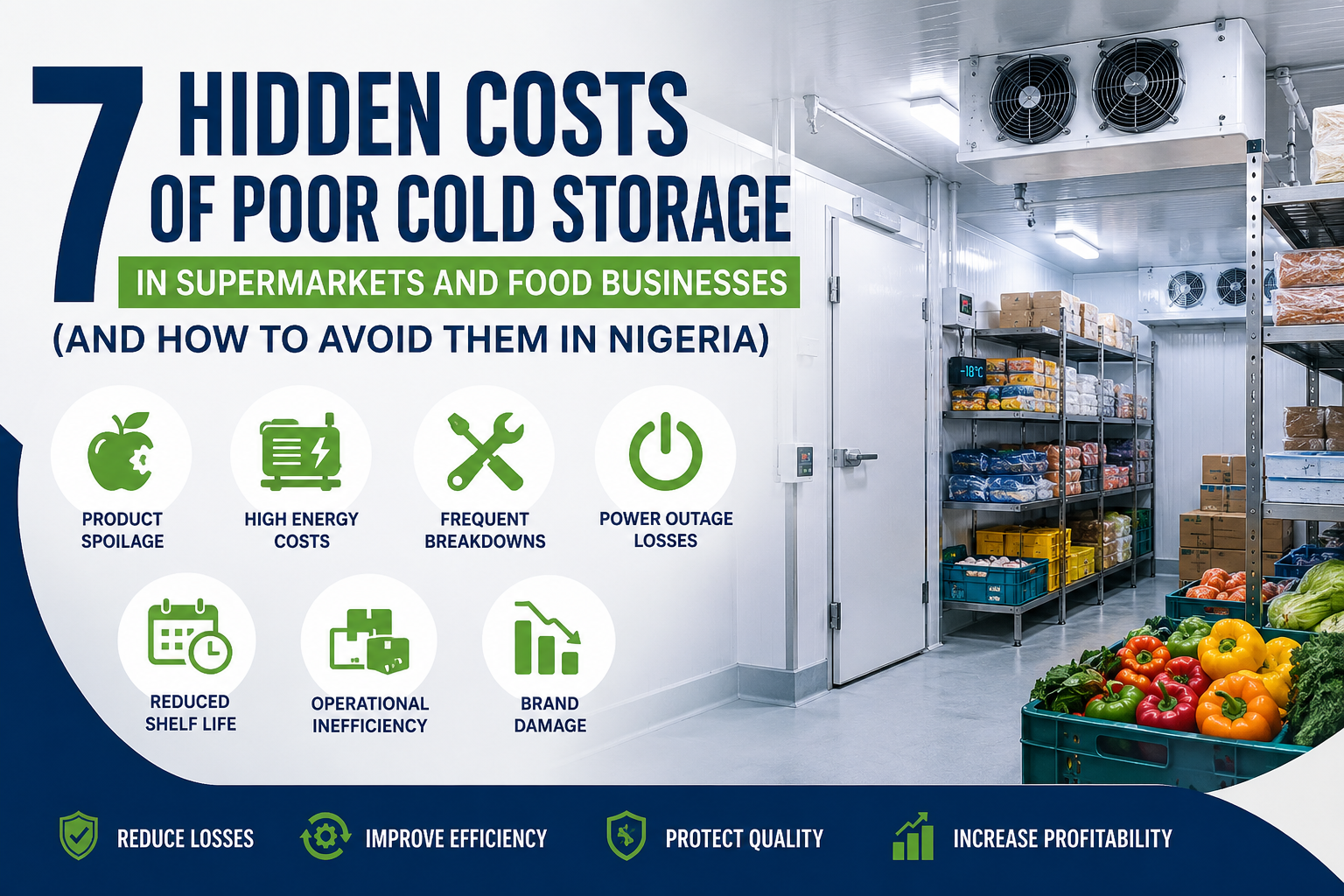
7 Hidden Costs of Poor Cold Storage
| Hidden Problem | Business Impact | Practical Solution |
|---|---|---|
| 1. Product Spoilage | Inconsistent temperatures damage food quality and increase waste. | Install properly designed cold rooms with stable cooling systems. |
| 2. High Energy & Diesel Costs | Poor insulation and inefficient cooling increase electricity and generator expenses. | Use energy-efficient panels, compressors, and properly sealed doors. |
| 3. Frequent Breakdowns | Constant repairs lead to downtime and inventory risk. | Invest in quality installation and preventive maintenance. |
| 4. Power Outage Losses | Weak insulation causes rapid temperature loss during outages. | Use thermal-efficient systems with reliable backup power support. |
| 5. Reduced Shelf Life | Products lose freshness faster, forcing businesses to sell at lower prices. | Maintain consistent temperatures and proper airflow. |
| 6. Operational Inefficiency | Poor storage arrangement slows workflow and creates clutter. | Use organized shelving and structured storage zones. |
| 7. Brand Damage | Poor product quality reduces customer trust and repeat sales. | Maintain reliable cold storage standards consistently. |
How to Avoid These Hidden Costs
| Solution Area | What Businesses Should Do | Key Benefit |
|---|---|---|
| 1. Design for Your Business Needs | Build cold rooms based on product type, storage volume, workflow, and daily operations. | Improves efficiency and prevents unnecessary energy waste. |
| 2. Invest in High-Quality Components | Use durable insulation panels, efficient compressors, and properly sealed doors. | Reduces diesel consumption, energy costs, and system failures. |
| 3. Use Smart Temperature Monitoring | Install systems that track temperatures and send alerts during fluctuations. | Prevents spoilage and detects issues early. |
| 4. Prepare for Power Challenges | Combine grid power with generators or solar backup systems. Use thermal-efficient cold rooms. | Protects products during outages and reduces cooling loss. |
| 5. Improve Shelving & Airflow | Organize products properly and maintain clear airflow pathways inside the cold room. | Ensures even cooling and improves operational efficiency. |
| 6. Prioritize Preventive Maintenance | Schedule regular inspections for compressors, cooling units, insulation panels, and electrical systems. | Reduces downtime and extends equipment lifespan. |
| 7. Focus on Long-Term ROI | Choose cold rooms based on efficiency, durability, and operating cost, not just purchase price. | Lowers long-term expenses and improves profitability. |
Reliable cold storage is not just about preserving products, it helps businesses reduce losses, improve efficiency, and maintain customer trust.
De Koolar Nigeria Limited provides:
- Custom cold room solutions
- Energy-efficient systems
- Professional installation
- Long-term technical support
Protect your products. Protect your profits.