
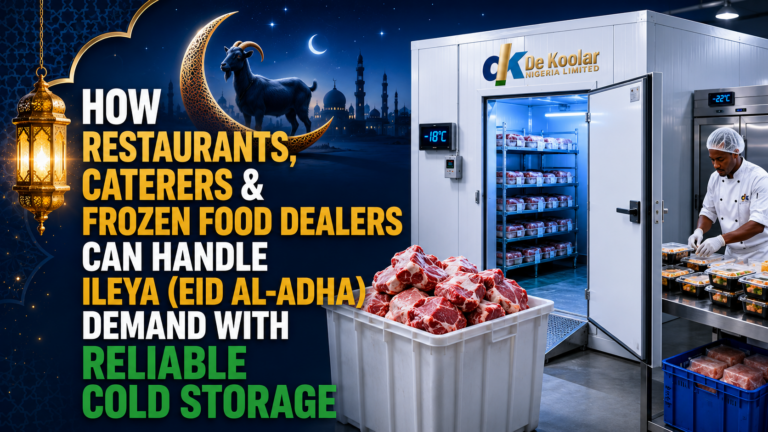
Ileya (Eid al-Adha) is one of the busiest seasons for food businesses in Nigeria. Demand for meat, poultry, fish, and frozen foods rises sharply as households, restaurants, and caterers prepare for celebrations. While this creates huge profit opportunities, it also comes with a major risk, food spoilage due to inadequate storage and poor handling.
For many businesses, the difference between profit and loss during Ileya comes down to one thing: reliable cold storage.
Why Ileya Puts Pressure on Food Businesses
| Challenge | Impact on Businesses |
|---|---|
| Sudden increase in meat supply | Overcrowded freezers and cold rooms |
| High demand for catering services | Fast depletion of stored stock |
| Hot weather conditions in Nigeria | Faster food spoilage |
| Power instability | Risk of temperature failure |
| Limited storage capacity | Loss of bulk buying advantages |
During this period, even a few hours of temperature failure can lead to significant financial losses.
The Role of Cold Storage During Ileya
Cold storage is not just about freezing food, it is about preserving quality, safety, and profitability.
| Food Type | Recommended Storage Condition | Purpose |
|---|---|---|
| Meat (beef, goat, ram) | -18°C and below | Prevent bacterial growth |
| Poultry & Fish | -18°C and below | Maintain freshness |
| Dairy products | 0°C – 4°C | Slow spoilage process |
| Frozen foods | Constant deep freeze | Preserve texture & taste |
Proper cold storage ensures food remains safe for consumption throughout the Ileya period and beyond.
Best Cold Storage Practices for Ileya Season
To maximize efficiency and reduce losses, businesses should adopt the following practices:
| Practice | Description |
|---|---|
| Temperature control | Maintain consistent freezing levels without fluctuations |
| Proper packaging | Use sealed containers to prevent contamination |
| Organized storage | Separate raw meat from other frozen goods |
| Avoid overloading | Allow airflow for effective cooling |
| Hygiene maintenance | Clean cold rooms before stocking food |
How Businesses Can Prepare for Ileya Demand
Preparation is key to surviving the Ileya rush.
- Forecast demand early based on past sales
- Pre-order frozen goods before peak pricing
- Secure cold room storage in advance
- Process and store meat in batches
- Ensure backup power supply (generator or inverter)
Restaurants and caterers who prepare early are better positioned to serve more customers without disruption.
Why Reliable Cold Storage Is a Business Investment
Many businesses see cold storage as an expense, but during Ileya, it becomes a profit protection tool.
Reliable cold storage helps to:
- Reduce food waste and financial losses
- Enable bulk purchasing at lower cost
- Maintain consistent product quality
- Increase customer satisfaction and trust
- Support business scalability during peak demand
Simply put, what you don’t lose to spoilage becomes your profit.
Common Mistakes to Avoid
| Mistake | Risk |
|---|---|
| Waiting until Ileya week to arrange storage | No availability, higher cost |
| Overloading freezers | Poor cooling efficiency |
| Ignoring temperature monitoring | Hidden spoilage risk |
| Poor meat handling hygiene | Food contamination |
| No backup power plan | Total stock loss |
Ileya(Eid al-Adha) is a golden opportunity for food businesses, but only for those who are prepared. Without proper cold storage, increased demand quickly turns into losses. With the right systems in place, however, businesses can scale, serve more customers, and maximize profit.
Now is the time to prepare, not during the rush.
Secure reliable cold storage ahead of the Ileya season and protect your food business from spoilage and loss.