
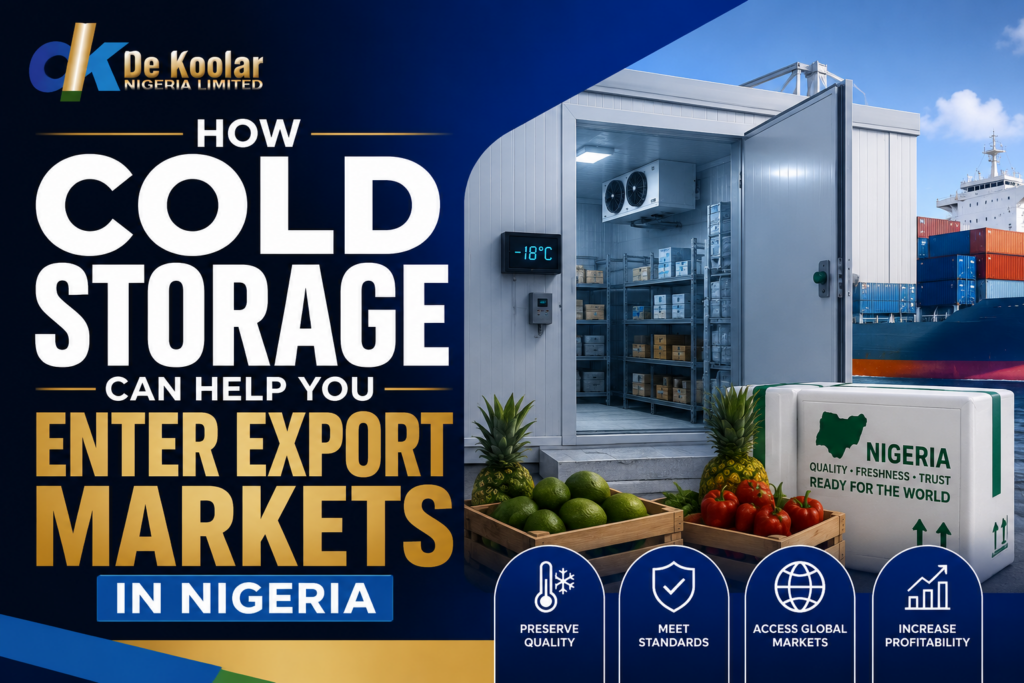
Nigeria is one of Africa’s largest producers of agricultural commodities, seafood, poultry, and processed foods. From fresh fruits and vegetables to frozen seafood and pharmaceuticals, Nigerian businesses have tremendous opportunities to serve regional and international markets.
However, exporting successfully requires more than producing high-quality goods. International buyers expect products to arrive fresh, safe, and in excellent condition. Without a reliable cold chain, even the best products can lose their value before reaching their destination.
According to the Food and Agriculture Organization (FAO), inadequate refrigeration and cold chain infrastructure contribute significantly to global food losses each year. For Nigerian exporters, investing in dependable cold storage is no longer a competitive advantage, it is a business necessity.
Whether you are exporting fresh produce, frozen foods, dairy products, seafood, meat, or temperature-sensitive pharmaceuticals, reliable cold storage can help you protect product quality, meet international standards, and build lasting relationships with global buyers.
Why Cold Storage Matters in Export Business
Every export journey involves multiple stages—harvesting or production, processing, packaging, warehousing, transportation, customs clearance, and international shipping. At every point, products are exposed to conditions that can affect their quality.
Without proper temperature control, exporters often face challenges such as:
- Rapid product deterioration
- High post-harvest losses
- Reduced shelf life
- Shipment rejections
- Financial losses
- Damaged brand reputation
- Loss of repeat customers
In Nigeria, these challenges are often intensified by high ambient temperatures and inconsistent power supply. A reliable cold storage system helps businesses overcome these obstacles by maintaining the required storage temperature throughout the supply chain.
Four Ways Cold Storage Supports Export Success
1. It Preserves Product Quality
Freshness is one of the first things international buyers evaluate. Changes in temperature can affect a product’s appearance, texture, nutritional value, taste, and overall marketability.
Cold storage slows down bacterial growth and natural deterioration, allowing products to retain their quality from production to delivery. This is particularly important for exporters dealing with fruits, vegetables, seafood, poultry, meat, dairy products, and other perishable goods.
2. It Extends Shelf Life
Export logistics often involve long transportation times, customs inspections, and extended warehousing before products reach their final destination.
Reliable cold rooms and blast freezers significantly extend shelf life by maintaining optimal storage conditions. This gives exporters greater flexibility in logistics planning while reducing spoilage and unnecessary waste.
3. It Helps Meet International Export Standards
Global buyers increasingly demand compliance with internationally recognized food safety and quality management systems.
While certification involves several operational processes, dependable cold storage supports compliance by helping businesses maintain consistent storage conditions and temperature records.
Many exporters work toward standards such as:
- Hazard Analysis and Critical Control Points (HACCP)
- ISO 22000 Food Safety Management Systems
- Good Distribution Practices (GDP) for pharmaceuticals
- Temperature traceability and documentation requirements
Having the right cold storage infrastructure demonstrates a commitment to quality, consistency, and food safety, qualities that international buyers value.
4. It Protects Business Profitability
Every spoiled shipment represents lost revenue, wasted production costs, and missed business opportunities.
Reliable cold storage helps businesses:
- Reduce post-harvest losses
- Minimize product waste
- Lower replacement costs
- Improve inventory management
- Increase customer satisfaction
- Build long-term buyer confidence
Over time, these benefits contribute to stronger profitability and sustainable business growth.
Industries That Benefit Most from Cold Storage
Cold storage plays a critical role across several export-driven industries.
- Agriculture: Fresh fruits, vegetables, herbs, and horticultural products remain fresh longer, increasing their export potential.
- Seafood and Fisheries: Fish, shrimp, and other seafood products require strict temperature control to preserve freshness and meet international food safety standards.
- Poultry and Meat Processing: Cold rooms and blast freezers help maintain product integrity from processing to export.
- Dairy Industry: Milk, cheese, yoghurt, and other dairy products depend on reliable refrigeration to maintain quality.
- Pharmaceuticals and Healthcare: Vaccines, medicines, laboratory products, and other temperature-sensitive medical supplies require precise cold storage to maintain effectiveness.
Regardless of the industry, maintaining an uninterrupted cold chain is essential for delivering products that meet global expectations.
Not every cold storage system is designed for export operations. Businesses should consider several factors before investing, including:
- Product type and storage temperature requirements
- Required storage capacity
- Energy efficiency
- Backup power solutions
- Temperature monitoring and recording systems
- Future expansion plans
- Ease of maintenance and servicing
Working with experienced cold chain specialists ensures your investment is designed to support both your current operations and future business growth.
Why Partner with Dekoolar Nigeria Limited?
At Dekoolar Nigeria Limited, we understand that reliable cold storage is the foundation of a successful cold chain. With years of experience in designing, installing, and maintaining industrial cold rooms, blast freezers, and temperature-controlled storage facilities, we help businesses preserve product quality and operate with confidence.
Our solutions are engineered to perform reliably in Nigeria’s challenging operating environment, delivering energy-efficient cooling, precise temperature control, and dependable after-sales support. Whether you operate in agriculture, food processing, pharmaceuticals, logistics, hospitality, or manufacturing, our team provides tailored cold chain solutions that align with your operational goals and export ambitions.
What Next?
Breaking into export markets is not just about producing quality products, it is about preserving that quality until it reaches the customer.
Reliable cold storage helps businesses reduce losses, extend product shelf life, comply with international standards, and strengthen buyer confidence. More importantly, it positions Nigerian exporters to compete successfully in an increasingly demanding global marketplace.
As international demand for high-quality Nigerian products continues to grow, investing in dependable cold chain infrastructure is a strategic decision that can unlock new markets, increase profitability, and support long-term business success.
Ready to expand into export markets? Partner with Dekoolar Nigeria Limited to build a reliable cold storage solution that protects your products, strengthens your supply chain, and prepares your business for global opportunities.