
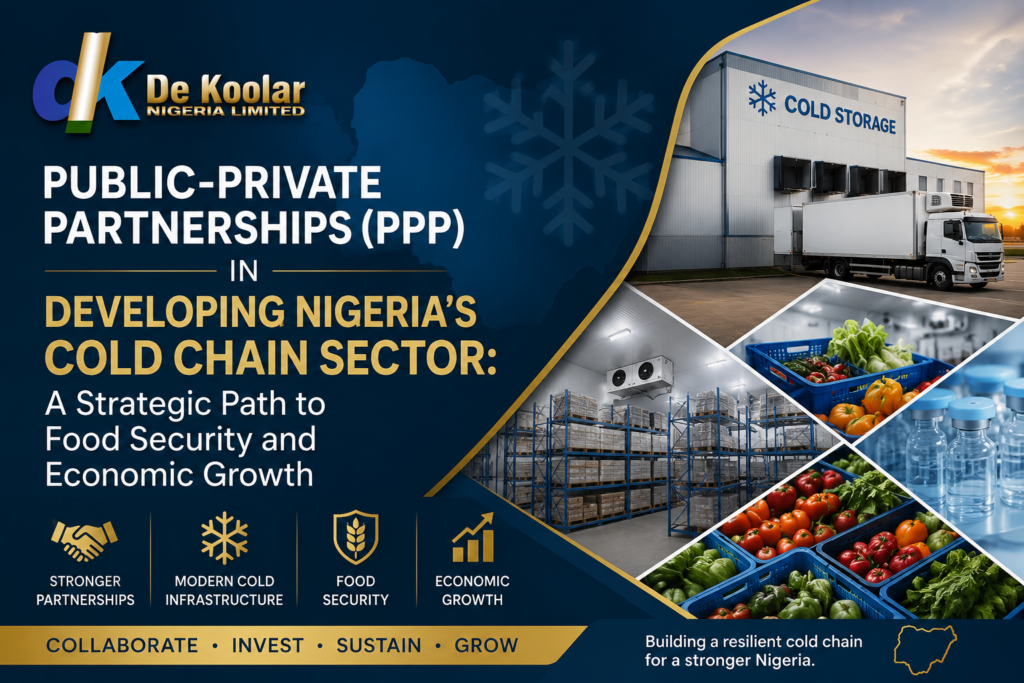
Nigeria is Africa’s largest economy and one of the continent’s leading agricultural producers, yet the country continues to struggle with one of its biggest infrastructure gaps, an underdeveloped cold chain system. Every year, millions of tonnes of fruits, vegetables, fish, meat, dairy products, and other perishable goods are lost before reaching consumers because of inadequate cold storage, unreliable electricity, and poor transportation infrastructure.
According to the Food and Agriculture Organization (FAO), roughly one-third of all food produced globally is lost or wasted, while Nigeria experiences post-harvest losses estimated at 30–50% for many perishable crops. These losses translate into billions of naira in lost income for farmers, higher food prices, reduced food availability, and increased pressure on national food security.
At the same time, sectors such as healthcare, pharmaceuticals, fisheries, hospitality, and food processing require reliable temperature-controlled storage to maintain quality, safety, and regulatory compliance.
Addressing these challenges requires significant investment that neither the government nor the private sector can efficiently deliver alone. This is where Public-Private Partnerships (PPP) become essential.
By combining government support with private-sector innovation, financing, and technical expertise, PPPs can accelerate the development of modern cold chain infrastructure that strengthens Nigeria’s agricultural value chain, improves healthcare logistics, creates jobs, and drives sustainable economic growth.
What is a Public-Private Partnership (PPP)?
A Public-Private Partnership (PPP) is a long-term collaborative arrangement between government institutions and private companies to finance, develop, operate, or maintain infrastructure and public services.
In Nigeria’s cold chain sector, PPPs may involve:
- Building modern cold storage facilities
- Developing solar-powered cold rooms
- Establishing refrigerated logistics networks
- Operating temperature-controlled warehouses
- Managing vaccine and pharmaceutical storage systems
- Providing long-term maintenance and technical support
The government typically provides enabling policies, land, incentives, or funding support, while private companies contribute capital investment, engineering expertise, operational efficiency, and innovative technologies.
This collaborative model reduces financial risk, improves service delivery, and accelerates infrastructure development.
Why Nigeria Needs Stronger Cold Chain Infrastructure
Nigeria’s agricultural sector contributes significantly to employment and national GDP, yet inadequate cold storage continues to undermine productivity.
Major challenges include:
High Post-Harvest Losses
Without access to refrigerated storage, farmers are often forced to sell produce immediately after harvest, regardless of market prices. Products that remain unsold quickly spoil, resulting in substantial financial losses.
Unreliable Electricity Supply
Cold rooms depend on uninterrupted power to maintain optimal temperatures. Frequent grid failures increase operational costs and reduce the reliability of conventional refrigeration systems.
Limited Rural Infrastructure
Many farming communities are located far from urban markets and lack nearby cold storage facilities. Poor road networks further increase transit times, leading to higher spoilage rates.
Inadequate Investment
Developing a nationwide cold chain network requires substantial capital expenditure. Limited financing and investment incentives have slowed infrastructure development across many regions.
The Economic Importance of PPP in Nigeria's Cold Chain Sector
1. Reducing Food Waste
A well-developed cold chain significantly extends the shelf life of perishable products. Fruits, vegetables, meat, fish, and dairy products remain fresh for longer periods, allowing farmers and distributors to reach larger markets while reducing spoilage.
2. Improving Food Security
Reducing food losses increases the quantity of safe, nutritious food available to consumers. This helps stabilize supply, moderate price fluctuations, and strengthen national food security.
3. Increasing Farmers’ Income
Cold storage gives farmers greater flexibility to sell produce when market prices are favorable instead of accepting low prices immediately after harvest. Improved product quality also attracts premium buyers.
4. Creating Employment Opportunities
Expanding cold chain infrastructure creates jobs across engineering, construction, refrigeration maintenance, logistics, warehouse operations, renewable energy, transportation, and equipment manufacturing.
5. Supporting Economic Diversification
A stronger cold chain enables growth in agro-processing, exports, pharmaceuticals, fisheries, hospitality, and food manufacturing, reducing dependence on oil revenues while supporting broader economic development.
Why Solar-Powered Cold Rooms Are Transforming Rural Agriculture
One of the biggest obstacles to reliable refrigeration in Nigeria is inconsistent electricity supply. Solar-powered cold rooms provide a sustainable alternative by harnessing renewable energy to maintain stable temperatures even in off-grid and underserved communities.
Key advantages include:
- Lower long-term operating costs
- Reduced dependence on diesel generators
- Improved energy efficiency
- Lower carbon emissions
- Greater reliability for rural farmers
- Enhanced access to modern food preservation technologies
Solar-powered cold rooms also align with Nigeria’s renewable energy goals and support climate-smart agricultural practices.
Key Sectors That Benefit from PPP-Driven Cold Chain Investments
While agriculture is the largest beneficiary, modern cold chain infrastructure supports multiple industries:
Agriculture
Fresh produce remains marketable for longer periods, reducing waste and improving profitability.
Fisheries
Temperature-controlled storage preserves fish quality, enabling longer distribution distances and increased export opportunities.
Healthcare
Vaccines, blood products, laboratory samples, and temperature-sensitive medicines require strict temperature control to remain safe and effective.
Hospitality and Food Service
Hotels, restaurants, supermarkets, and catering businesses depend on reliable refrigeration to maintain food quality, reduce waste, and comply with food safety standards.
Pharmaceutical Industry
Temperature-controlled storage ensures medicines remain effective throughout storage and transportation, supporting patient safety and regulatory compliance.
Challenges to Effective PPP Implementation
Despite its potential, successful PPP implementation requires addressing several structural challenges:
- Policy inconsistency and regulatory uncertainty
- Limited access to long-term financing
- High infrastructure development costs
- Weak transport and logistics networks
- Shortage of skilled refrigeration professionals
- Limited awareness of the economic benefits of cold chain investment
Addressing these issues through coordinated public policies, investment incentives, technical training, and transparent governance will help unlock the full potential of Nigeria’s cold chain sector.
Global Success Stories: What Nigeria Can Learn from PPP-Led Cold Chain Development
Several countries have demonstrated how effective Public-Private Partnerships (PPPs) can transform cold chain infrastructure and stimulate economic growth.
India: Scaling Agricultural Cold Storage
India has one of the world’s largest cold storage networks, developed through a combination of government incentives, private investment, and agricultural financing. PPP initiatives have helped expand temperature-controlled warehouses, pack houses, and refrigerated transport systems, reducing post-harvest losses and improving farmers’ access to domestic and international markets.
Key lesson for Nigeria: Well-designed government incentives and private-sector participation can rapidly expand cold storage capacity and strengthen agricultural value chains.
Kenya: Empowering Smallholder Farmers
Kenya has embraced solar-powered cold storage solutions through partnerships involving government agencies, development organizations, and private companies. These initiatives have enabled smallholder farmers to preserve fruits, vegetables, dairy products, and fish, increasing incomes while reducing food waste.
Key lesson for Nigeria: Renewable energy can make cold storage accessible even in remote communities with limited grid electricity.
Rwanda: Building an Integrated Cold Chain
Rwanda has invested heavily in logistics infrastructure, food processing, and cold storage through strategic public-private collaborations. The country has positioned itself as a regional hub for agricultural exports by prioritizing quality preservation from farm to market.
Key lesson for Nigeria: Cold chain investment should be integrated into broader national agricultural and export development strategies.
The Role of Technology in Modern Cold Chain Infrastructure
The future of cold chain management extends beyond refrigeration. Digital technologies are improving efficiency, transparency, and operational reliability.
Emerging innovations include:
- Internet of Things (IoT) temperature monitoring
- Remote equipment diagnostics
- Predictive maintenance powered by Artificial Intelligence (AI)
- GPS-enabled refrigerated transport
- Automated inventory management
- Energy-efficient refrigeration systems
- Solar-powered cold rooms with battery backup
These technologies reduce operational costs, improve product quality, and minimize equipment downtime. For businesses handling perishable goods, digital monitoring also supports compliance with food safety and pharmaceutical regulations.
Dekoolar Nigeria Limited: Driving Innovation in Nigeria's Cold Chain Sector
As demand for dependable cold storage continues to grow, Dekoolar Nigeria Limited is playing an important role in strengthening Nigeria’s cold chain ecosystem.
With years of experience in refrigeration engineering and cold room solutions, Dekoolar delivers innovative systems designed to meet the needs of agriculture, healthcare, food processing, hospitality, pharmaceuticals, and commercial businesses.
The company’s solutions include:
- Solar-powered cold rooms
- Walk-in cold rooms
- Industrial refrigeration systems
- Blast freezers
- Chiller rooms
- Freezer rooms
- Cold room maintenance and servicing
- Custom-designed refrigeration solutions
Beyond installation, Dekoolar provides preventive maintenance, technical support, and system optimization to ensure long-term performance and energy efficiency. This lifecycle approach reflects industry best practices and helps clients maximize the return on their investment.
By combining engineering expertise with a commitment to quality and customer support, Dekoolar contributes to reducing food waste, improving healthcare logistics, and strengthening Nigeria’s refrigeration infrastructure.
Recommendations for Accelerating PPP Investment
To unlock the full potential of Nigeria’s cold chain sector, coordinated action is needed across government, investors, development partners, and private companies.
Government
- Develop clear and consistent PPP policies.
- Introduce tax incentives for cold chain investments.
- Improve rural road and power infrastructure.
- Expand access to affordable financing.
- Support technical education in refrigeration and cold chain management.
Private Sector
- Invest in energy-efficient and renewable-powered refrigeration technologies.
- Adopt international food safety and cold chain standards.
- Build long-term maintenance strategies into every project.
- Partner with farming cooperatives and healthcare providers to expand access.
Development Partners and Financial Institutions
- Provide concessional financing for cold chain projects.
- Support pilot programmes in underserved communities.
- Encourage technology transfer and workforce development.
Promote sustainable infrastructure aligned with climate resilience goals.
The Future Outlook for Nigeria's Cold Chain Industry
Nigeria’s growing population, expanding urban centres, rising demand for fresh food, and increasing pharmaceutical needs make cold chain infrastructure more important than ever.
Emerging trends such as e-commerce grocery delivery, modern retail expansion, food processing, export-oriented agriculture, and renewable energy adoption will continue to drive demand for reliable cold storage solutions.
Public-Private Partnerships offer a practical and sustainable model for meeting this demand. By combining government support with private-sector innovation, Nigeria can build a resilient cold chain network that improves livelihoods, reduces waste, creates jobs, and strengthens national food security.
Frequently Asked Questions (FAQ)
1. What is a Public-Private Partnership (PPP)?
A Public-Private Partnership is a long-term agreement where government and private companies collaborate to finance, build, operate, or maintain public infrastructure and services.
2. Why is PPP important for Nigeria’s cold chain sector?
PPPs mobilize private investment and technical expertise while leveraging government support, accelerating the development of cold storage infrastructure that neither sector could efficiently provide alone.
3. What is a cold chain?
A cold chain is a temperature-controlled supply chain that preserves perishable products such as food, vaccines, medicines, seafood, dairy products, and agricultural produce during storage and transportation.
4. How does cold chain infrastructure reduce food waste?
By maintaining optimal storage temperatures, cold chain systems slow spoilage, extend shelf life, preserve quality, and reduce post-harvest losses.
5. What industries benefit from cold chain investments?
Agriculture, fisheries, pharmaceuticals, healthcare, food processing, hospitality, supermarkets, logistics, and export businesses all rely on effective cold chain infrastructure.
6. Why are solar-powered cold rooms important in Nigeria?
Solar-powered cold rooms provide reliable refrigeration in areas with inconsistent electricity, reduce operating costs, lower carbon emissions, and improve access for rural communities.
7. What challenges affect Nigeria’s cold chain industry?
Key challenges include unreliable electricity, limited cold storage facilities, poor transportation infrastructure, financing constraints, and policy inconsistency.
8. How can PPPs improve healthcare delivery?
PPPs support investment in temperature-controlled facilities that ensure vaccines, blood products, and medicines remain safe and effective throughout the supply chain.
9. What are the economic benefits of investing in cold chain infrastructure?
Benefits include reduced food losses, increased farmer income, job creation, improved food security, stronger exports, and enhanced industrial growth.
10. Why should investors consider Nigeria’s cold chain sector?
Growing demand for fresh food, expanding healthcare services, rapid urbanisation, and government infrastructure priorities make the sector a promising long-term investment opportunity.
11. What role does preventive maintenance play in cold chain systems?
Routine maintenance improves equipment efficiency, reduces downtime, extends asset lifespan, and helps maintain consistent storage temperatures.
12. How can businesses choose the right cold storage partner?
Businesses should look for providers with proven engineering expertise, quality equipment, after-sales support, energy-efficient solutions, and experience across multiple industries.
Nigeria’s ambition to strengthen food security, improve healthcare delivery, and diversify its economy depends on modern infrastructure and the cold chain is a critical part of that foundation. Public-Private Partnerships provide an effective framework for bridging infrastructure gaps, attracting investment, and accelerating the deployment of sustainable cold storage solutions across the country.
From reducing post-harvest losses and improving vaccine distribution to supporting exports and creating employment, the benefits of a well-developed cold chain extend far beyond refrigeration. They contribute directly to economic resilience, public health, and national development.
As governments, investors, development agencies, and private enterprises work together to expand Nigeria’s cold chain capacity, experienced industry partners will play a vital role in turning policy into measurable impact.
Dekoolar Nigeria Limited remains committed to delivering innovative, energy-efficient, and reliable cold room solutions that empower farmers, businesses, healthcare institutions, and industrial clients across Nigeria. Through technical excellence, customer-focused service, and a commitment to sustainable refrigeration technologies, Dekoolar is helping build the resilient cold chain infrastructure needed for Nigeria’s future.
One Response